Professor Kittipan Rerkasem
Leg Vein Clinic Thailand
Evidence-Based Answers from Vascular Research
“Doctor, I always cross my legs. Will I get varicose veins?”
“Does wearing high heels cause varicose veins?”
These are among the most commonly asked questions in vein clinics worldwide.
In this article, we will review scientific evidence and explain in simple terms:
- Whether crossing your legs can truly cause varicose veins
- Whether high heels increase your risk
- Which factors are proven as the real causes of varicose veins
What Are Varicose Veins?
Varicose veins occur when the valves inside the leg veins become weak or damaged, causing blood to pool in the lower legs instead of returning efficiently to the heart.
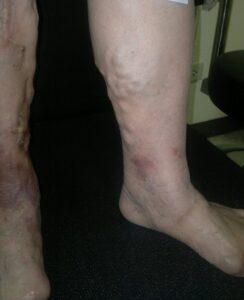
This increases venous pressure and makes the veins dilate and bulge.
Common symptoms include:
- Heavy, aching, or tired legs
- Swelling around the ankles, especially in the evening
- Nighttime cramps
- Itching or burning along visible veins
- Skin discoloration or even non-healing ulcers in severe cases
Varicose veins are not just a cosmetic problem—they are a sign of chronic venous disease.
Proven Risk Factors (Strong Evidence)
Extensive research shows that the major causes of varicose veins are:
- Genetics / Family history
If one parent has varicose veins → your risk increases significantly.
If both parents have them → the risk may exceed 80%.
- Age
The valves in leg veins degenerate over time.
- Female gender and hormones
Female hormones weaken vein walls and valves.
- Pregnancy (especially multiple pregnancies)
Pregnancy further increases pressure in the leg veins.
- Standing or sitting for long periods
Occupations such as nurses, cashiers, hairdressers, surgeons, teachers, and office workers are at risk.
- Obesity / Excess body weight
Now notice:
❗ “Crossing legs” and “wearing high heels” are NOT on the list of proven major causes. But they may influence symptoms or worsen underlying venous insufficiency.
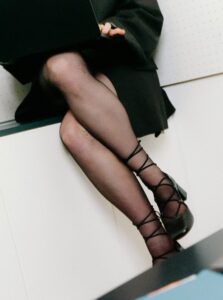
Does Crossing Your Legs Cause Varicose Veins?
What the research says
Many people believe that crossing legs blocks blood flow and causes varicose veins. However, no high-quality study has proven that leg crossing directly causes the condition.
Large observational studies have found:
- No statistical association between leg-crossing habit and development of varicose veins
- However, prolonged sitting (with or without crossing) reduces venous return and may increase symptoms in people who already have valve problems
In other words:
Crossing your legs does NOT “cause” varicose veins.
But if you already have poor venous circulation, it may temporarily worsen swelling, heaviness, or visible veins.
Why do some people feel worse when crossing legs?
When you cross your legs, you:
- Bend and mildly compress veins around the knee and thigh
- Reduce muscle pump activity in the calf muscle
- Slow down venous return to the heart
So if you already have venous reflux, the blood stays in the legs longer, making the veins feel heavier and more swollen.
That is why some patients say:
“When I sit uncrossed or stand up and move, my symptoms improve.”
The problem is inactivity, not the crossing motion itself.
Do High Heels Cause Varicose Veins?

The biomechanics explanation
When wearing high heels:
- The ankle is constantly forced into a plantarflexed (toe-down) position
- The calf muscle stays in a shortened state
- The calf muscle pump, which normally pushes blood back toward the heart, becomes less effective
Several studies have measured venous pressure in women wearing high heels and found:
- Venous return is slower
- Calf muscle contraction is weaker
- Venous pressure increases after prolonged standing in high heels
However…
Key Evidence-Based Conclusion
High heels do NOT directly “cause” varicose veins. But they reduce the efficiency of venous pumping, which may worsen symptoms or accelerate vein dilation in people already prone to venous disease.
Wearing 8–10 cm stilettos daily for hours is certainly worse than wearing 3–5 cm heels occasionally.
Practical Advice: How to Minimize Risk
If you like crossing your legs
You do NOT need to quit forever — just follow these principles:
✔ Change leg positions every 20–30 minutes
✔ Flex your ankles and move your toes frequently
✔ Stand up and walk when possible
✔ If swelling or heaviness occurs → consider medical-grade compression stockings
If you need to wear high heels shoes
✔ Choose moderate heel height (3–5 cm is ideal)
✔ Avoid wearing high heels all day, every day
✔ Walk barefoot or in flat shoes during breaks
✔ Stretch your calf muscles after removing heels
✔ If you already have varicose veins → consult a vein specialist first
When Should You See a Vein Specialist?
You should get a Duplex ultrasound evaluation if you have:
- Bulging or twisted veins
- Heavy legs every evening
- Swollen ankles
- Night cramps
- Dark skin around the ankles
- Vein pain after long standing
- Family history of varicose veins
This non-invasive ultrasound test shows:
- Whether your valves are leaking
- Which veins are affected
- Whether treatment is necessary
Treatment options today include:
Modern Treatment
Compression stockings: First-line symptom management
SclerotherapyInjectable treatment for smaller veins
Endovenous laser (EVLA)Minimally invasive laser closure of faulty veins
Radiofrequency ablation: Heat-based closure from inside the vein
Microphlebectomy:Tiny incisions to remove bulging veins
All are walk-in, walk-out procedures requiring no major surgery. (NO SCAR)
Final Summary
✔ Crossing your legs does NOT cause varicose veins
– But may worsen symptoms if you already have venous reflux
✔ Wearing high heels does NOT directly cause varicose veins
– But may impair calf muscle pumping and make symptoms worse
✔ The real causes include
– Genetics, age, pregnancy, prolonged standing, and excess weight
✔ Prevention tips
– Move every 20–30 minutes
– Flex your ankles
– Alternate heel heights
– Maintain healthy weight
– Use compression stockings when needed