
Spider Veins and Varicose Veins: Is Injection Treatment Alone Enough?
Professor Kittipan Rerkasem
Many patients assume that once visible spider veins or varicose veins disappear after injection treatment, the problem has been completely solved.
However, this is not always the case.
For many patients, the visible veins are only part of the problem. The underlying cause may lie in the main superficial veins, particularly the great or small saphenous veins, where faulty venous valves allow blood to flow backward (venous reflux). Unless this underlying problem is identified and managed appropriately, new veins may develop over time.
How Does Sclerotherapy Work?
Sclerotherapy is a well-established treatment in which a sclerosant solution is injected directly into abnormal superficial veins.
The solution produces controlled injury to the vein wall, causing the vein to collapse and eventually be absorbed naturally by the body.
Sclerotherapy is commonly used to treat:
- Spider veins
- Reticular veins
- Selected small varicose veins
Over several weeks to months, the treated veins gradually fade from view.
Why Do Spider Veins Sometimes Return?
In many patients, spider veins are not the primary disease but rather a manifestation of underlying chronic venous insufficiency.
When the valves within the saphenous vein become incompetent, blood flows backward (venous reflux) instead of returning efficiently toward the heart.
This persistent reflux increases venous pressure throughout the superficial venous system.
The elevated pressure may lead to:
- Development of new spider veins
- Recurrence of varicose veins
- Leg heaviness or aching
- Swelling
- Skin discoloration
- Chronic venous skin changes and, in advanced disease, venous ulcers
If only the visible veins are treated while venous reflux persists, the underlying hemodynamic abnormality remains.
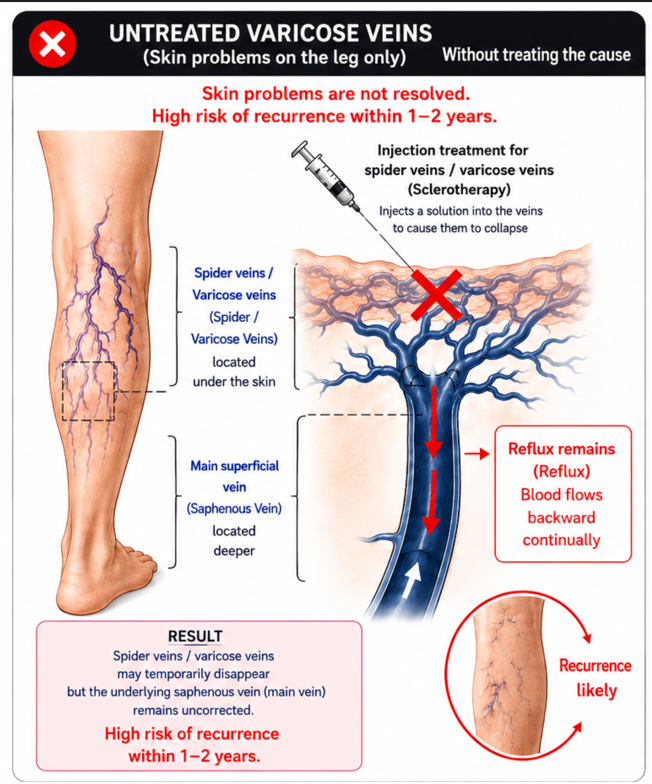
Figure 1 illustrates how injection treatment can successfully eliminate superficial veins while reflux in the underlying saphenous vein continues, potentially contributing to recurrence over time.
Should Patients Have a Venous Ultrasound?
Patients with the following features may benefit from duplex venous ultrasound before treatment:
- Large varicose veins
- Extensive spider veins
- Leg pain, heaviness, or swelling
- Skin discoloration
- Recurrent veins after previous treatment
Venous ultrasound helps determine:
- Whether venous reflux is present
- Which veins are involved
- The severity of valve dysfunction
- The most appropriate treatment strategy
This allows treatment to be individualized rather than based solely on the visible appearance of the veins.
Treating the Underlying Cause
When significant saphenous vein reflux is identified, physicians may recommend treating the underlying source first using procedures such as:
- Endovenous Laser Ablation (EVLA)
- Radiofrequency Ablation (RFA)
- Other evidence-based treatments as clinically appropriate
Residual spider veins or cosmetic surface veins can then be treated with:
- Sclerotherapy
- Surface laser therapy
- Microphlebectomy
For appropriately selected patients, this staged approach may improve long-term treatment success and may reduce the likelihood of recurrence.
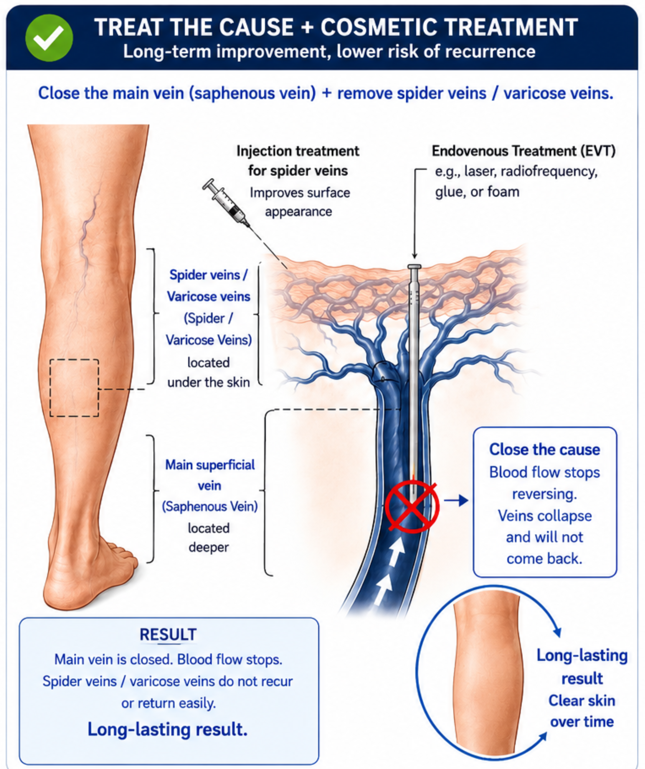
Figure 2 illustrates when reflux in the underlying saphenous vein discontinues, injection treatment can successfully eliminate superficial veins
Key Takeaway
Sclerotherapy is an excellent treatment for many patients.
However, successful long-term management depends on identifying whether underlying venous reflux is present.
A comprehensive venous ultrasound evaluation enables physicians to diagnose the true cause of venous disease and develop an individualized treatment plan aimed not only at improving appearance but also at addressing the underlying pathology whenever appropriate.
If you have any questions, please contact our doctor with Whatsapp +66818846638
Medical Disclaimer
Treatment outcomes vary among individuals and depend on the underlying diagnosis, disease severity, vein anatomy, patient-specific factors, and the treating physician’s clinical judgment.